
Export Guide

Red Chilli Export from India: A Complete Guide for Global Buyers
Published on June 19, 2026 by Eversure Globals · Last Updated July 04, 2026

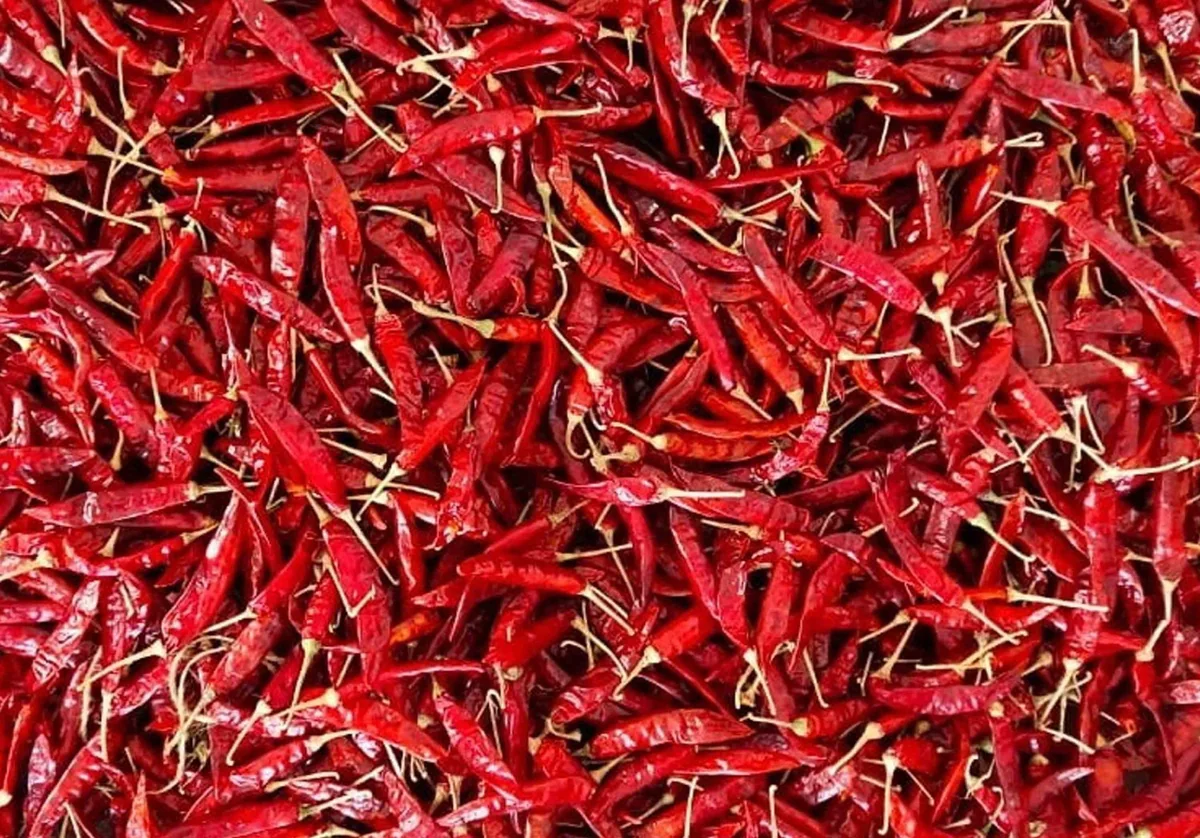
Vibrant Indian red chillies dried and ready for export

India is the world's largest producer and exporter of red chillies, accounting for over 40% of global production. From mild Kashmiri chillies prized for their color to fiery Guntur Sannam that defines South Indian cuisine, Indian chillies serve diverse markets across all continents. This guide covers everything international buyers need to know.

As a leading red chilli exporter from India, Eversure Globals supplies premium-grade products directly from certified farms and processing units. buy red chilli in bulk with APEDA-certified documentation and guaranteed quality.

India's Dominance in the Global Chilli Trade

India produces approximately 1.8 million MT of chillies annually, with exports exceeding $1.2 billion. The unique combination of climate zones, from the hot, dry Deccan plateau to the humid coastal regions, allows India to grow chillies with widely varying heat levels, color intensities, and flavor profiles. Major producing states include Andhra Pradesh, Karnataka, Maharashtra, Madhya Pradesh, and Rajasthan.

The global demand for Indian chillies spans food processing, spice blending, oleoresin extraction, and pharmaceutical applications. The USA, China, UAE, UK, Germany, and Southeast Asian countries are the largest importers, each seeking specific varieties for their culinary traditions and industrial needs.

Indian Red Chilli Varieties and Their Export Applications

Byadgi Chilli (Karnataka)

Named after the town in Karnataka, Byadgi chillies are famous for their deep crimson color and mild heat (15,000-20,000 SHU). They are the preferred choice for food coloring and paprika substitutes in European and American markets. Byadgi chillies contain high capsanthin content, the pigment responsible for their vivid red hue, making them ideal for oleoresin extraction.

Guntur Sannam (Andhra Pradesh)

Guntur Sannam is the workhorse of Indian chilli exports. With a Scoville rating of 35,000-40,000 SHU, it offers substantial heat with a balanced flavor. This variety is the primary choice for spice powder exports, curry masala manufacturing, and industrial food processing. Guntur district alone produces over 30% of India's chilli output.

Teja Chilli (Andhra Pradesh)

For buyers seeking intense heat, Teja chillies deliver 75,000-100,000 SHU. This variety is popular in the Middle East, Africa, and Southeast Asia where high pungency is preferred. Teja is also the primary raw material for capsaicin extraction used in pharmaceutical and defense applications.

Kashmiri Chilli (Jammu & Kashmir)

Kashmiri chillies are prized for their vibrant red color and mild heat (2,000-3,000 SHU). They are essential for premium culinary applications where color matters more than heat. The unique growing conditions in the Kashmir valley produce chillies with exceptional color stability and a subtle, fruity undertone.

Bird's Eye Chilli (Northeast & South India)

These tiny chillies pack extreme heat at 100,000-225,000 SHU. Bird's Eye chillies are exported to specialty markets, hot sauce manufacturers, and ethnic food processors catering to Southeast Asian and African diaspora communities.

Export Specifications for Red Chillies

Parameter Export Grade Standard Premium Grade
Moisture Content Maximum 12% Maximum 10%
Foreign Matter Maximum 1% Maximum 0.5%
Broken/Damaged Maximum 3% Maximum 1%
Seed Content Maximum 25% Maximum 20%
Color Value (ASTA) 100-140 150-200+
Capsaicin Content 0.3% - 0.8% 0.8% - 1.2%
Aflatoxin B1 Under 5 ppb Under 2 ppb

Red Chilli Export Pricing

Chilli prices are highly seasonal, fluctuating with the March-April harvest. Indicative FOB prices as of mid-2026:

  • Byadgi (whole dried): $1.80 - $2.40 per kg for color-grade material
  • Guntur Sannam (whole dried): $1.60 - $2.20 per kg depending on SHU and color value
  • Teja (whole dried): $2.20 - $3.00 per kg for high-heat grade
  • Kashmiri (whole dried): $3.50 - $5.00 per kg for premium color-grade
  • Chilli Powder (60-80 mesh): $2.50 - $3.50 per kg with ASTA 140+
  • Crushed Chilli Flakes: $2.00 - $2.80 per kg with seeds
  • Chilli Oleoresin: $25 - $40 per kg depending on capsaicin concentration

Request current red chilli pricing from Eversure Globals for export-ready quotes tailored to your SHU and color requirements.

Certifications and Documentation

APEDA Registration

Mandatory for all spice exports. APEDA ensures exporters meet baseline quality standards and maintains the Spices Board quality monitoring system.

Spices Board Registration

The Spices Board of India provides additional quality certifications specific to chillies, including color value testing and microbial analysis. Registered exporters receive preferential support at international trade fairs.

Phytosanitary Certificate

Required by all importing countries to confirm the shipment is free from pests, diseases, and contaminants.

Country-Specific Requirements

USA: FDA registration, aflatoxin testing, and compliance with FDA defect action levels. EU: pesticide residue compliance under Regulation 396/2005, ethylene oxide ban. Japan: positive list compliance for all agricultural chemicals. UAE/Saudi Arabia: SASO certification for processed chilli products.

The Chilli Export Process

  1. Inquiry (Day 1): Specify variety, SHU range, color value, form (whole/powder/crushed), and quantity.
  2. Sample Dispatch (Day 3-5): Pre-shipment samples tested for SHU, color value, and moisture.
  3. Lab Testing (Day 7-10): Full batch tested for aflatoxin, microbiology, and pesticide residues.
  4. Contract (Day 12-15): Proforma invoice, 30% advance confirmation.
  5. Processing (Day 18-28): Cleaning, grading, stem cutting, grinding (if powder), and packaging.
  6. Documentation (Day 30-35): APEDA, Spices Board, Phytosanitary, COO, and fumigation certificates.
  7. Shipment (Day 36-42): Container loading from Guntur, Byadgi, or Mumbai ports.

Red Chilli Export Documentation & Compliance

Exporting red chilli requires IEC Code from DGFT, APEDA Registration, Spice Board Certificate, FSSAI License, Phytosanitary Certificate, Certificate of Origin, and third-party lab reports for moisture, aflatoxin, pesticide residues, and SHU ratings.

HS Codes & Import Duties by Country

Country HS Code Duty
USA 0904.21.00 0%
UK 0904.21 0%
EU 0904.21 0%
UAE 0904.21 0%
China 0904.21 0-5%
Thailand 0904.21 0%

Red chilli harvest is December to March. Guntur Sannam ready February-March, Byadgi January-February. Best pricing March-May post-harvest. Monsoon months see 15-20% increases. October-December pre-harvest tightness pushes prices 10-15% above baseline. Lock in annual contracts during March-May.

How to Verify Quality Before Ordering

  1. SHU: Confirm SHU matches declared variety (Guntur 40-50k, Byadgi 15-20k, Teja 75-100k).
  2. Moisture: Must not exceed 10-12%.
  3. Aflatoxin: EU requires below 10 ppb; USA below 20 ppb.
  4. Color: Byadgi ASTA color above 150; Kashmiri above 200.
  5. Sample: Request 1kg sample for visual and cooking test before bulk order.
  • Turmeric — Complete spice export basket.
  • Black Pepper — Essential for spice blending.
  • Jeera — Third pillar of Indian spice exports.
  • Edible Oils — Groundnut and mustard oils complement spice exports.

People Also Ask

Which Indian red chilli is the hottest?

Teja chilli from Guntur rates 75,000-100,000 SHU. Guntur Sannam is 40,000-50,000 SHU. Byadgi is mild at 15,000-20,000 SHU despite its intense red color.

How is red chilli powder made for export?

Whole dried chillies are cleaned, ground in stainless steel hammer mills to 60-80 mesh, sieved, and packed in laminated moisture-barrier bags. Premium powder commands 15-20% higher pricing than whole chillies.

What is ASTA color value in red chilli?

ASTA measures capsanthin (red pigment) concentration. Byadgi scores 150-200 ASTA, Kashmiri 200-250+, Guntur Sannam 80-120. European buyers prioritize high ASTA for visual appeal.

Can red chilli be exported to Europe?

Yes, with strict EU compliance: pesticide MRL limits, aflatoxin below 10 ppb, and microbiological standards. Eversure Globals provides comprehensive lab testing and EU-compliant documentation.

Common Mistakes Buyers Make When Importing Red Chilli

  1. Confusing Color for Heat: Byadgi chilli has intense red color but low SHU (15-20k). Buyers expecting heat often receive mild powder. Always verify SHU ratings with lab reports.
  2. Ignoring Aflatoxin Limits: EU requires below 10 ppb aflatoxin. Many exporters skip testing. Always request aflatoxin certificates for European-bound shipments.
  3. Not Specifying Mesh Size: Chilli powder is ground to 40, 60, or 80 mesh. Food manufacturers need specific mesh for consistent product texture. Always specify mesh size in orders.
  4. Buying Without ASTA Testing: ASTA color value determines visual appeal. European buyers reject shipments below 120 ASTA for standard varieties and 180+ for premium.
  5. Overlooking Stem Content: Stems add weight but no value. Premium-grade chilli should have zero stems. Always specify stem-cut or stemless in your purchase order.

Export Cost Breakdown for Red Chilli

For a 20ft FCL (20 MT) of Guntur Sannam whole chilli FOB Chennai:

  • Product Cost: $3,000/MT x 20 MT = $60,000
  • Packaging: $20/MT x 20 MT = $400
  • Lab Testing & Certifications: $500 flat
  • Inland Transport: $20/MT x 20 MT = $400
  • FOB Handling: $550 flat
  • Total FOB: ~$61,850 ($3,093/MT effective)

Powder orders add grinding costs of $150-200/MT. Add sea freight and destination clearance for landed cost.

Seasonal Demand Calendar for Red Chilli

Q1 (Jan-Mar): Harvest season for Byadgi and Guntur. Best pricing and quality. Lock contracts now.

Q2 (Apr-Jun): Post-harvest abundance. Steady pricing, good for volume orders.

Q3 (Jul-Sep): Monsoon supply constraints. Prices rise 15-20%. Plan ahead for Q4 needs.

Q4 (Oct-Dec): Pre-harvest tightness and festival demand. Prices peak. Minimize orders if possible.

Export Packaging Deep Dive for Red Chilli

Red chilli is highly sensitive to moisture and light during transit. Standard export uses 25kg and 50kg laminated polypropylene bags with aluminum foil liners for whole chillies. Powder requires nitrogen-flushed laminated bags to prevent oxidation and color fading.

For European and North American retail markets, we offer 10kg bulk bags, 1kg stand-up pouches with zip-lock, and 500g retail packs with window displays. All retail packaging includes oxygen absorbers to maintain color and pungency.

Palletization for FCL orders uses 8-high stacking on heat-treated wooden pallets with corner boards and stretch-wrap. This prevents bag rupture from shifting and enables efficient container loading. Container desiccants are placed every 2 meters to absorb residual moisture.

Labeling must include product name, variety, SHU rating, ASTA color value, net weight, batch number, origin, harvest date, best-before date, and importer details. EU-bound shipments require allergen labeling and organic certification logos where applicable.

Regulatory Compliance Checklist for Red Chilli

  • USA: FDA registration, prior notice, Phytosanitary Certificate, fumigation certificate, and third-party lab reports for aflatoxin and pesticide residues.
  • EU: EU MRL compliance for pesticide residues, aflatoxin below 10 ppb total, Salmonella absence, and full traceability documentation with farm-level GPS coordinates.
  • UK: UK MRL standards, Phytosanitary Certificate, COO, and Port Health Authority notification.
  • UAE/GCC: ESMA conformity, Phytosanitary Certificate, COO attestation, and Halal certificate if marketed as halal.
  • China: GB standards compliance, CIQ inspection, Phytosanitary Certificate, and Chinese label requirements for retail products.

Building a Long-Term Chilli Supply Chain

Start with a 1 MT trial order combining multiple varieties (Guntur Sannam, Byadgi, Teja) to evaluate quality and market response. After establishing demand patterns, negotiate 6-month contracts with monthly or quarterly shipments. Annual contracts for 5 MT+ monthly secure 8-12% below spot pricing and priority during harvest season.

Container Loading Best Practices for Red Chilli

Red chilli requires extra care during container loading due to its sensitivity to moisture and odors. Always use dry, odor-free containers with intact door seals. Stack chilli bags on wooden pallets with center spacers to prevent shifting and bag rupture during sea transit.

Place container desiccants every 1.5 meters along the container walls and floor to absorb humidity. For powder shipments, avoid stacking above 8 layers to prevent compaction and caking. Whole chillies can be stacked up to 10 layers on sturdy pallets with corner boards.

Container temperature should not exceed 25 degrees C during loading. Pre-cooling is recommended for summer shipments. Premium varieties like Guntur Sannam and Byadgi should be loaded separately from Teja and Mundu to prevent cross-contamination of color and aroma profiles.

Conclusion

Indian red chillies offer unmatched variety, quality, and value for global buyers. By understanding SHU ranges, color values, and certification requirements, you can source the exact chilli specification your market demands.

Get a Red Chilli Export Quote from Eversure Globals
Global Inquiries

Start Your Partnership.

Reach out to Eversure Globals to discuss your import requirements. Our export specialists respond to all business inquiries within 24 hours.

Corporate Headquarters

Pune, Maharashtra, India

Email Direct

admin[at]eversureglobals[dot]com

Call Us

+91 9689527784

WhatsApp

+91 9689527784

Send a Formal Inquiry