
Export Guide

Black Pepper Export from India: A Complete Guide for Global Buyers
Published on June 19, 2026 by Eversure Globals · Last Updated July 04, 2026

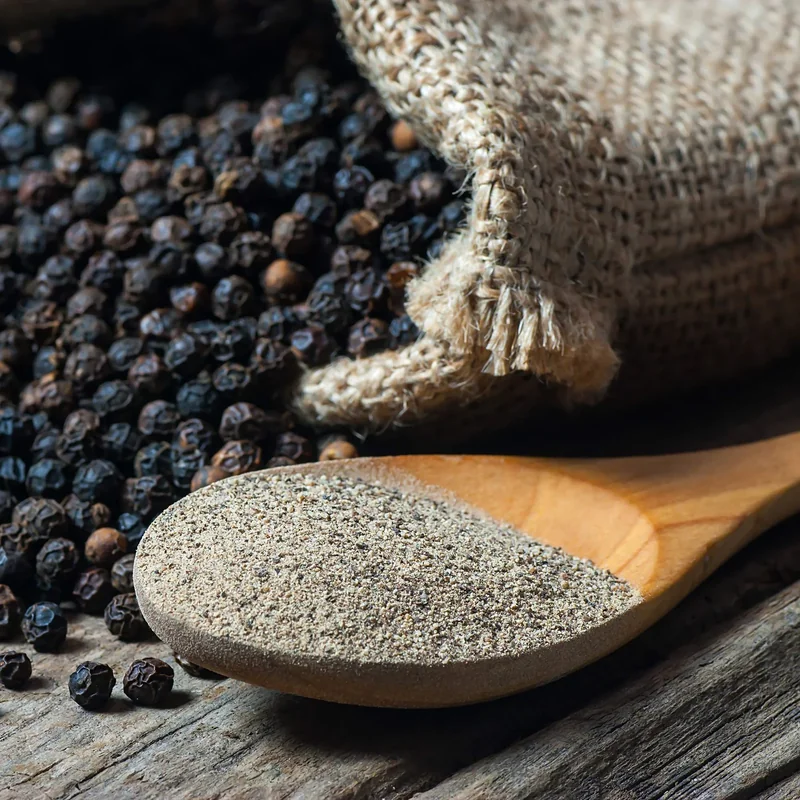
Premium Indian Malabar black peppercorns ready for export

India is the birthplace of black pepper, and Malabar pepper remains the global benchmark for quality. From the misty hills of Kerala and Karnataka to processing mills in Kochi, Indian black pepper continues to command premium prices in markets from New York to Tokyo. This guide covers everything buyers need to know about sourcing authentic Indian pepper.

As a leading black pepper exporter from India, Eversure Globals supplies premium-grade products directly from certified farms and processing units. buy black pepper in bulk with APEDA-certified documentation and guaranteed quality.

India's Legacy as the Home of Black Pepper

Black pepper (Piper nigrum) is native to the Western Ghats of India, where it has been cultivated for over 2,000 years. The Malabar Coast gave this spice to the world, and Indian pepper still sets the standard against which all other origins are measured. The unique combination of tropical rainfall, laterite soil, and altitude between 300-1,200 meters creates the perfect environment for high-piperine pepper.

India produces approximately 75,000 MT of black pepper annually, with exports valued at over $250 million. The USA, Germany, UK, Netherlands, Russia, and UAE are the largest importers, using Indian pepper for spice blending, food processing, essential oil extraction, and pharmaceutical applications.

Indian Black Pepper Varieties and Their Export Applications

Malabar Garbled (MG) Grade 1

The standard export grade, Malabar Garbled consists of bold, uniform peppercorns with a minimum diameter of 4.25mm. It is cleaned, sorted, and garbled (processed to remove light berries and foreign matter). MG Grade 1 is the workhorse of the export trade, suitable for retail spice jars, food manufacturing, and industrial grinding. Piperine content ranges from 3.5% to 5.5%.

Tellicherry Garbled (TG) Extra Bold

Named after the historic port city in Kerala, Tellicherry pepper represents the premium tier of Indian exports. Only the largest peppercorns, exceeding 4.75mm in diameter, qualify for this grade. Tellicherry pepper commands 15-25% price premiums due to its complex flavor profile, higher essential oil content (2.5-4.5%), and superior piperine levels (4.5-6.5%). It is preferred by gourmet retailers, Michelin-starred restaurants, and premium spice brands.

Malabar Ungarbled (MU) Grade

Ungarbled pepper contains all sizes of peppercorns, including smaller and lighter berries. It is used primarily for oleoresin extraction, essential oil distillation, and industrial grinding where particle size uniformity is less critical. MU grade offers significant cost savings while maintaining acceptable piperine and oil content.

Lampong and Speciality Grades

Beyond standard grades, Indian exporters offer specialty peppercorns including fully mature black pepper with maximum pungency, white pepper (hulled black pepper) for light-colored sauces, and green peppercorns (freeze-dried or brined) for gourmet culinary applications.

Export Specifications for Black Pepper

Parameter MG Grade 1 TG Extra Bold
Minimum Berry Size 4.25mm 4.75mm
Piperine Content 3.5% - 5.0% 4.5% - 6.5%
Volatile Oil 2.0% - 3.5% 2.5% - 4.5%
Moisture Content Maximum 13% Maximum 12%
Foreign Matter Maximum 0.5% Maximum 0.3%
Light Berries Maximum 3% Maximum 1%
Density (g/L) 550-600 580-620

Black Pepper Export Pricing

Pepper prices are among the most volatile in the spice trade, fluctuating with harvest cycles, global supply from Vietnam and Brazil, and currency movements. Indicative FOB prices from Cochin or Mangalore ports as of mid-2026:

  • Malabar Garbled Grade 1: $4,500 - $5,500 per MT for standard grade
  • Tellicherry Extra Bold: $5,500 - $7,000 per MT for premium grade
  • Malabar Ungarbled: $3,800 - $4,500 per MT for extraction grade
  • White Pepper (hulled): $6,500 - $8,000 per MT
  • Black Pepper Powder (mesh 30-60): $5,000 - $6,200 per MT
  • Pepper Oleoresin (40-60% piperine): $35 - $50 per kg

Request current black pepper pricing from Eversure Globals for accurate quotes based on your specific grade and volume requirements.

Certifications and Export Documentation

Spices Board Registration

The Spices Board of India is the primary regulatory body for pepper exports. Registration provides access to quality testing facilities, market development support, and participation in international trade promotion programs.

APEDA Registration

Mandatory for all spice exports, APEDA registration ensures compliance with export quality standards and access to infrastructure support at designated ports.

Phytosanitary Certificate

Confirms the shipment is free from pests, diseases, and contaminants. Essential for all importing countries.

Country-Specific Requirements

USA: FDA facility registration and aflatoxin testing. EU: pesticide residue compliance with strict limits on piperonyl butoxide and other treatments. Japan: positive list system for all agricultural chemicals. Germany: additional microbiological testing for salmonella and E. coli.

The Black Pepper Export Process

  1. Inquiry (Day 1): Specify grade (MG/TG/MU), quantity, and destination.
  2. Sample Dispatch (Day 3-5): Pre-shipment samples with lab reports for piperine and volatile oil.
  3. Lab Testing (Day 7-10): Full batch analysis for piperine, oil content, moisture, and aflatoxin.
  4. Contract (Day 12-15): Proforma invoice, 30% advance confirmation.
  5. Processing (Day 18-28): Cleaning, garbling, grading, and packaging at Cochin or Mangalore.
  6. Documentation (Day 30-35): Spices Board, APEDA, Phytosanitary, COO, and fumigation certificates.
  7. Shipment (Day 36-42): Container dispatch from Cochin, Mangalore, or JNPT ports.

Black Pepper Export Documentation & Compliance

Exporting black pepper from India requires specific documentation: IEC Code from DGFT, APEDA Registration, Spice Board Certificate, FSSAI License, Phytosanitary Certificate, Certificate of Origin, and third-party lab reports for piperine content and moisture.

HS Codes & Import Duties by Country

Country HS Code Duty
USA 0904.11.00 0%
UK 0904.11 0%
EU 0904.11 0%
UAE 0904.11 0%
Japan 0904.11 3-5%

Indian black pepper is harvested December to February. Best pricing is March to May post-harvest. Monsoon months (June-September) see 10-15% price increases. December-January peaks due to holiday demand. Lock in 6-month contracts during March-May.

How to Verify Quality Before Ordering

  1. Piperine: Request lab report showing 3.5%+ for Malabar, 5.0%+ for Tellicherry.
  2. Moisture: Must not exceed 12-13%.
  3. Physical: Uniform color, no mold, pungent aroma.
  4. Sample: Always request 500g sample before 5 MT+ orders.
  5. Credentials: Verify APEDA, Spice Board, and FSSAI licenses.
  • Turmeric — Essential companion spice.
  • Red Chilli — Complete heat and color needs.
  • Jeera — Cornerstone spice for Middle Eastern cuisine.
  • Basmati Rice — Pair spices with aged Basmati.

People Also Ask

Which Indian state produces the best black pepper?

Kerala produces the finest Indian black pepper from the Malabar Coast and Tellicherry regions. Karnataka (Coorg) is second, followed by Tamil Nadu.

How long does black pepper last in storage?

Whole black pepper maintains quality for 24-36 months below 25°C with 60% humidity. Ground pepper lasts 12-18 months.

What is the difference between black and white pepper?

Black pepper is dried unripe fruit with skin intact, stronger flavor. White pepper has skin removed, milder and fermented, preferred in light sauces.

Can I get organic certified black pepper?

Yes. Eversure Globals sources organic black pepper (NPOP/USDA Organic) from certified Kerala and Karnataka farms. Organic commands 30-40% premium.

Common Mistakes Buyers Make When Importing Black Pepper

  1. Ignoring Piperine Content: Many buyers focus only on price and overlook piperine percentage. Low piperine pepper (below 3%) is often old stock or improperly stored. Always request HPLC lab reports.
  2. Not Specifying Garbled vs Ungarbled: Ungarbled pepper contains stems, stones, and debris. If you need clean pepper for direct retail, always specify MG1 Garbled or Tellicherry Garbled.
  3. Overlooking Moisture Levels: Pepper with moisture above 13% will mold during sea transit, especially on routes exceeding 20 days. Insist on moisture testing before shipment.
  4. Buying Without Sample Approval: First-time buyers who skip sample evaluation risk receiving different grades than ordered. Always approve a 500g representative sample.
  5. Missing Fumigation Requirements: USA, Australia, and several European countries require methyl bromide or phosphine fumigation certificates. Confirm destination requirements before shipping.

Export Cost Breakdown for Black Pepper

Understanding the full cost structure helps buyers budget accurately. For a 20ft FCL (20 MT) of MG1 Malabar pepper FOB Mumbai:

  • Product Cost: $7,500/MT x 20 MT = $150,000
  • Packaging: $15/MT x 20 MT = $300
  • Lab Testing & Certifications: $400 flat
  • Inland Transport to Port: $25/MT x 20 MT = $500
  • FOB Handling & Documentation: $600 flat
  • Total FOB: ~$151,800 ($7,590/MT effective)

Add sea freight ($1,200-3,500 depending on destination) and destination customs clearance for total landed cost.

Seasonal Demand Calendar for Black Pepper

Q1 (Jan-Mar): Post-harvest supply abundant, best pricing. Ideal for annual contract negotiations.

Q2 (Apr-Jun): Steady supply, moderate pricing. Good for mid-year restocking.

Q3 (Jul-Sep): Monsoon constraints, prices rise 10-15%. Order early if stock is needed for Q4.

Q4 (Oct-Dec): Pre-harvest tightness and holiday demand push prices to yearly highs. Avoid large orders unless necessary.

Export Packaging Deep Dive for Black Pepper

Proper packaging is critical for maintaining pepper quality during sea transit. Standard export uses 25kg and 50kg laminated polypropylene bags with multiple moisture barriers. For high-humidity destinations like Southeast Asia and coastal Europe, we recommend double-bagging with an inner polyethylene liner.

Retail packaging options include 10kg bags for wholesale markets, 1kg vacuum-sealed pouches for supermarket shelves, and 500g glass jars for gourmet retail. Vacuum-sealed pouches extend shelf life by 6-12 months by eliminating oxygen exposure.

Palletization is standard for FCL orders: 25kg bags are stacked 10 high on wooden pallets, stretch-wrapped, and secured with corner boards. This prevents shifting during sea transit and enables easy unloading at destination warehouses using forklifts.

Labeling requirements vary by destination. EU-bound shipments require labels in the destination language showing product name, net weight, batch number, origin, and importer details. USA-bound shipments need FDA-compliant labels with allergen declarations and nutrition facts if sold at retail.

Regulatory Compliance Checklist for Black Pepper

  • USA: FDA registration, prior notice filing, Phytosanitary Certificate, fumigation certificate, and third-party lab reports for pesticide residues and microbial contamination.
  • EU: EU MRL compliance for 487 pesticide residues, aflatoxin below 4 ppb for B1 and 10 ppb total, Salmonella absence in 25g sample, and full traceability documentation.
  • UK: Post-Brexit UK MRL standards, Phytosanitary Certificate, COO, and Defra import notification for certain quantities.
  • UAE/GCC: Halal certificate (if claiming halal), ESMA conformity, Phytosanitary Certificate, and COO attested by Chamber of Commerce.
  • Japan: Positive List System compliance for agricultural chemicals, aflatoxin below 10 ppb, and Japan Food Chemical Research Foundation testing for certain additives.

Building a Long-Term Pepper Supply Chain

Successful international buyers approach Indian pepper sourcing as a partnership rather than a transaction. We recommend starting with a 1 MT trial order to evaluate quality, communication, and documentation accuracy. After two successful trial shipments, negotiate a 6-month supply agreement with quarterly price reviews tied to the Indian Spice Market Index.

For buyers requiring 10 MT+ monthly, we offer farm-level contracting where specific farms are dedicated to your supply. This ensures consistent variety, grade, and harvest timing. Annual contracts typically secure 5-8% below spot market pricing.

Container Loading Best Practices for Black Pepper

When shipping black pepper in FCL containers, proper stowage is critical to prevent bag damage and quality degradation. Bags should be stacked on wooden pallets with slip sheets to prevent bottom-bag crushing. Use dunnage (air bags or timber) to fill gaps and prevent cargo shifting during sea transit.

Container pre-cooling to 18-20 degrees C before loading prevents condensation during the voyage. Place 2-3 container desiccants per 20ft container to absorb residual humidity. Avoid loading during rainy weather, and ensure the container floor is clean and dry before pallet placement.

For high-value shipments, consider using high-cube (40ft HC) containers with extra ventilation. Premium Tellicherry and Malabar pepper should be segregated from standard grades to prevent aroma cross-contamination. Always seal container doors with numbered bolt seals and photograph seal numbers for documentation.

Conclusion

Indian black pepper, particularly Malabar and Tellicherry grades, remains the gold standard for global buyers. By understanding grade classifications, demanding proper lab testing, and working with registered exporters, you can secure consistent supply of authentic Indian pepper.

Get a Black Pepper Export Quote from Eversure Globals
Global Inquiries

Start Your Partnership.

Reach out to Eversure Globals to discuss your import requirements. Our export specialists respond to all business inquiries within 24 hours.

Corporate Headquarters

Pune, Maharashtra, India

Email Direct

admin[at]eversureglobals[dot]com

Call Us

+91 9689527784

WhatsApp

+91 9689527784

Send a Formal Inquiry